

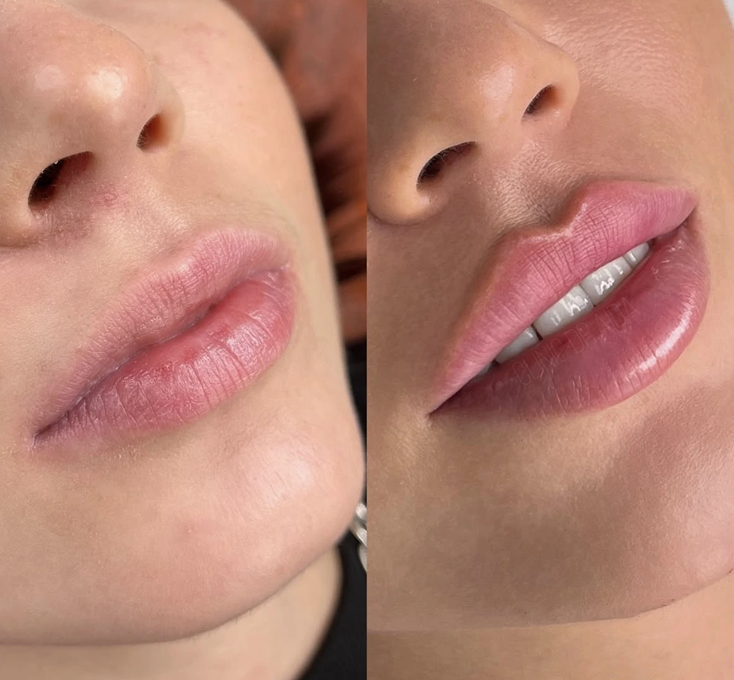

Russian lips before and after results: Achieving a flat profile
The evolution of lip augmentation has established a clear preference for crisp definition over basic volumetric enlargement. Among the various specialized injection protocols, the distinct methodology from Eastern Europe remains a global benchmark for patients who desire a visually wide yet structurally flat smile.
This approach meticulously avoids the forward projection that often causes an artificial, protruding silhouette from the side view. Instead, the technique focuses on heightening the vertical plane of the lips, creating an elegant frame that balances the rest of the facial features. When reviewing authentic russian lips before and after clinical portfolios, the primary transformation observed is the dramatic elevation of the upper lip border combined with an incredibly sleek, flat profile. The result provides a highly stylized, photogenic appearance that maintains its crisp structure even during facial movement.
The technical precision of vertical micro-injections
The foundation of this specific look lies in a highly structured, meticulous injection pattern that differs fundamentally from classic linear threading. Practitioners utilize ultra-fine needles to deliver small, vertical droplets of hyaluronic acid filler into the lip body, working from the border inward toward the wet-dry mucosal line. This micro-papular technique acts like a series of internal pillars, lifting the lip tissue upward rather than pushing it outward. By placing the product superficially and vertically, the specialist locks the shape into a flat, vertical banner, preventing the filler from pooling in the front. This degree of precision requires extensive knowledge of labial anatomy to ensure the product is distributed evenly without compromising blood flow or causing irregularities.
Preparing the tissue and managing previous fillers
A successful outcome with this technique requires a perfectly clean anatomical slate, as existing filler from traditional methods can completely ruin the structural design. If a patient has residual product that has migrated above the border or settled horizontally, the practitioner will almost always recommend a full dissolution process using hyaluronidase. Attempting to layer vertical micro-injections over older, displaced gel leads to a loss of definition and a higher risk of lumpiness. After the older product is safely dissolved and the tissue has fully recovered for approximately one to two weeks, the new structure can be built with maximum precision. This strict preparation ensures the new borders stay incredibly sharp, clean, and beautifully defined.
Post-treatment healing and product integration stages
Because this technique involves a high density of micro-punctures, the initial reaction of the tissue is typically characterized by notable swelling and minor bruising. Understanding the timeline of recovery helps patients manage their expectations during the first few days:
- Day 1 to 2: Marked swelling and temporary firmness, making the lips look temporarily over-corrected.
- Day 3 to 5: Significant reduction in swelling as the fluid clears and bruising begins to fade.
- Day 6 to 10: The hyaluronic acid gel softens and begins to integrate smoothly with the natural labial tissue.
- Day 14: Full stabilization of the shape, revealing the true, crisp, flat profile.
Adhering to professional aftercare guidelines, such as avoiding intense heat and strenuous exercise during the first forty-eight hours, ensures optimal healing and product placement.
Selecting the right candidate and maintaining results
This vertical lift technique is exceptionally well-suited for individuals with a thin upper lip or a long distance between the nose and the mouth, as it visually shortens the philtrum. However, a comprehensive facial assessment is crucial to ensure that a highly defined, wide lip shape harmonizes with the patient’s overall facial bone structure. The longevity of the shape typically ranges from six to twelve months, depending on individual metabolic rates and the density of the chosen filler. To preserve the flat profile, future touch-ups must be performed conservatively and only when the previous product has significantly broken down. Over-filling the area too soon can overload the tissue pillars, causing the crisp vertical boundaries to collapse into a conventional horizontal shape.