

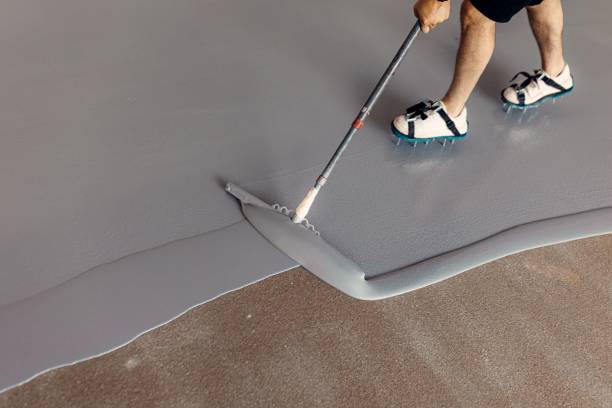

Good epoxy work depends as much on timing as it does on the product itself. Professional crews have only a limited window to mix, spread, level, and finish each batch before the resin begins to change. Managing that window carefully helps epoxy flooring cure evenly and keeps one section from looking or performing differently from the next.
Why Does Working Time Matter So Much?
Epoxy starts reacting the moment resin and hardener are combined. Proper working time gives installers enough room to pour, squeegee, backroll, and blend edges before the material becomes too thick to move correctly. Once that window closes, the coating can drag under a roller, hold tool marks, or stop leveling on its own. Larger batches can shorten the useful window because the material generates heat as it cures, and a deep bucket holds that heat instead of letting it escape across the floor. Certain products also require a short induction period before application, which crews must include in their timing.
Smaller Batches Give Crews Better Control
Crews often divide a large project into measured sections so each mix covers a predictable amount of floor. Warm conditions make this even more important because higher temperatures speed the chemical reaction and shorten pot life.
Reduced batch size helps technicians stay ahead of the cure while keeping thickness more consistent. Skilled installers match each mix to crew speed, room layout, product chemistry, and the amount of detail around walls, drains, columns, or equipment. People comparing epoxy floors near me should expect a contractor to have a clear plan for how much material gets mixed at one time. Tight spaces usually need less material per batch because cutting around obstacles takes longer than coating an open rectangle.
Temperature Changes the Clock
Temperature affects both how fast epoxy reacts and how easily it spreads. Cold material may feel thicker and move more slowly, while warm resin can flow well at first but begin setting sooner than expected. Contractors monitor the slab, room, and product temperatures because all three can influence application pace. A garage that feels comfortable may warm quickly once sunlight reaches the slab, which can reduce working time.
Large Commercial Floors Need a Steady Mixing Rhythm
Marked floor zones help crews coordinate mixing with spreading. Each section receives a known amount of material, making it easier to spot whether the coating is going down too heavy or too light before the batch is gone.
Organized staging matters even more with commercial epoxy flooring, where several people may be mixing, carrying, squeegeeing, and rolling at the same time. Delays between those steps can create lap lines, texture changes, or visible differences in gloss. Fast-moving crews still need discipline because rushing a batch can lead to poor blending or missed edges. Facility managers searching for epoxy flooring near me should ask how the installer organizes large pours and keeps batches moving at a consistent pace.
Pot Life and Floor Working Time Are Not the Same
Pot life usually describes how long mixed epoxy remains usable in the container under stated conditions. Actual floor working time can be different because the resin begins cooling once it is poured out and spread into a thinner layer. Material that seems workable in a bucket may already be building heat quickly, which is why experienced crews do not wait for obvious thickening before getting it onto the floor. Container shape and batch depth matter too, since a deep mass of resin retains more reaction heat than a shallow one.
Why Oversized Batches Can Cause Trouble
Veteran installers know that mixing more product at once does not always save time. Oversized mixes force the crew to move faster, and the resin may heat up before workers reach the far side of the planned area.
Premature thickening can leave roller marks, uneven coverage, or a rough transition where one batch meets the next. Decorative finishes can also suffer if flakes are broadcast after the base coat has already begun to close. Homeowners searching for an epoxy garage floor near me should understand that smaller, controlled mixes often produce a cleaner result than one oversized pour. Fresh edges are easier to blend when the next batch arrives while the previous section is still within the correct application stage.
Batch Planning Supports Better Layer-to-Layer Adhesion
Every coating layer has its own working time, cure stage, and recoat window. Thoughtful batch planning helps the crew finish one layer evenly enough that the next can bond without excessive sanding, patching, or correction. Staggered sections can cure ahead of neighboring areas and make intercoat adhesion harder to control, especially on large floors with multiple work zones.
Elite Coastal Epoxy can plan batch sizes, coverage rates, and application timing around the product, slab temperature, room conditions, and crew pace. Their team can also adjust the workflow for residential garages and commercial spaces so each section receives fresh, properly mixed material before the working window closes. That level of control helps epoxy floor companies produce a more consistent surface instead of relying on speed alone.