

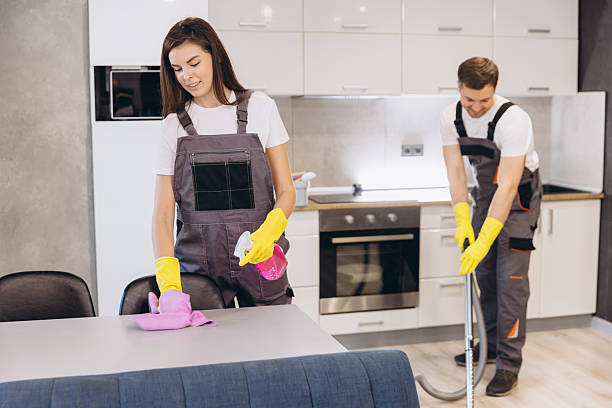

A property manager I know oversees three office buildings in the Denver metro. For two years she rotated through cleaning vendors — each one starting strong and gradually deteriorating. The callbacks went unanswered. The bathrooms that were supposed to be deep-cleaned monthly kept getting skipped. The daytime porter who was listed in the contract never actually showed up. She spent more time managing the cleaning company than managing her buildings.
When she finally found a cleaning partner that performed consistently — who showed up as scheduled, communicated proactively, and delivered the same quality on week forty as on week one — she told me it changed her entire workweek. That is what genuinely reliable Commercial Cleaning Services look like: not impressive during the sales process but invisible during operations, because the work gets done right without her having to chase it.
Why Reliability Is the Most Important Trait in a Cleaning Vendor
Most business owners who have managed commercial cleaning contracts for any length of time will tell you the same thing: quality on day one is not the predictor that matters. What matters is consistency over time. A cleaning crew that delivers exceptional results for the first month and then steadily degrades because the company moved their best people to a new contract is worse than a crew that was merely good from the start and stayed that way.
Reliability in commercial cleaning manifests in specific, concrete ways. Crews show up when the schedule says they will — not an hour late, not skipping a day because a team member called in sick without arranging coverage. Checklists are followed, not interpreted loosely. Restocking of paper products and soap happens automatically, not only when someone complains. Supervisors inspect completed work before leaving rather than trusting that the crew caught everything.
The businesses that get this level of service consistently are not always paying more than those who do not. They are working with vendors who have built the operational systems — training programs, supervision protocols, accountability structures — that make consistent performance achievable at scale.
What a Commercial Cleaning Scope of Work Should Actually Cover
One of the most common sources of disappointment in commercial cleaning relationships is a mismatch between what the client expected and what the contract actually specified. Cleaning scopes that are vague leave room for interpretation that rarely works in the client’s favor. A scope that says ‘clean common areas’ is very different from one that says ‘vacuum all carpeted areas, mop all hard-surface floors, wipe down all horizontal surfaces including window sills and door frames, empty and reline all waste receptacles.’
A thorough commercial cleaning scope covers daily tasks — what gets done every service visit — as well as periodic deep cleaning tasks that happen weekly, monthly, or quarterly. Window cleaning, floor stripping and waxing, deep carpet extraction, high-dusting of ceiling fixtures and vents, and restroom grout scrubbing are typically periodic tasks. Confirming the frequency and method for each of these before signing a contract prevents the frustrating discovery that the service you thought was included was never actually promised.
Walk-through inspections at contract initiation, with both parties present, set a shared baseline for what the cleaned facility is supposed to look like. Regular re-inspections against that baseline keep quality from drifting and give both parties objective grounds for conversations when something is not meeting the standard.
Cleaning Frequency and Its Impact on Facility Health
How often a commercial facility needs professional cleaning depends on several factors: the square footage, the number of employees and visitors, the industry and its associated cleanliness standards, and the nature of the work being done in the space. A medical office has different cleaning needs than a law firm, which has different needs than a warehouse break room.
Under-cleaning has costs that are not always visible immediately but accumulate over time. Carpets that are not vacuumed regularly mat down and wear faster, requiring replacement years earlier than they would with proper maintenance. Hard floors that are not properly maintained lose their finish and eventually require expensive refinishing or replacement. Restrooms that are not cleaned frequently enough create impressions that affect how employees feel about their workplace and how clients feel about the company.
The right cleaning frequency is the one that keeps the facility in the condition it needs to be in — not the lowest frequency a vendor will agree to without pushing back, and not the highest frequency a vendor can sell. An honest assessment of the facility’s actual needs is the starting point for any cleaning program that will deliver genuine value.
Green Cleaning and Why It Matters for Commercial Spaces
The cleaning products used in a commercial facility affect not just cleanliness but air quality, employee health, and environmental footprint. Conventional cleaning chemicals can contribute to indoor air quality problems — volatile organic compounds from certain floor polishes, disinfectants, and glass cleaners accumulate in closed commercial spaces and can affect respiratory health over time, particularly for employees who spend eight or more hours a day in the building.
Green cleaning programs that use EPA-registered, safer-choice certified, or other verified low-VOC products address these concerns without sacrificing cleaning effectiveness. Microfiber cleaning systems reduce chemical use by mechanically removing contaminants rather than relying entirely on chemical action. HEPA filtration vacuums capture fine particulates rather than redistributing them into the air. PBC Cleaning delivers Commercial Cleaning Services that combine the reliability Colorado businesses need with the environmental responsibility that modern facilities management increasingly demands.