

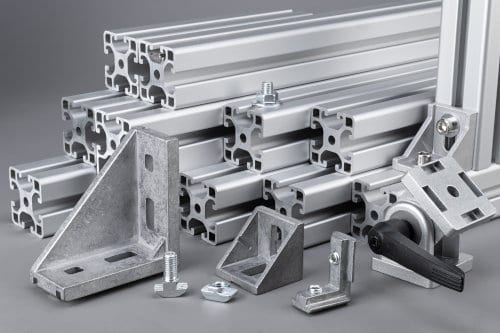

Modern robotic systems rely on structural components that can keep up with speed, accuracy, and constant reconfiguration. MiniTec Aluminum Framing stands out because it blends precision engineering with user-friendly adaptability, giving robotics teams more control over how automated cells are shaped and upgraded. These framing systems bring together strength, flexibility, and clean design in ways that directly support fast-moving robotic equipment.
Self-aligning Powerlock Connectors Ensure Dead-on Precision for Robot Paths
Powerlock connectors are engineered to lock profiles into place with exact alignment, which helps robotic arms follow accurate and predictable paths. Minor misalignment may not seem serious at first, but high-speed robotic movements amplify even the smallest structural inconsistencies. With MiniTec extruded aluminum framing, the connectors guide profiles into perfect positioning without the need for extensive shimming or secondary fixtures.
This precision also cuts down on time spent adjusting robot coordinates or recalibrating equipment after installation. Robotic paths stay reliable because the extruded aluminum T slot system prevents drift across long production cycles. Teams can maintain stable accuracy even as cells expand or receive new attachments.
High Strength-to-weight Ratios Allow Faster Arm Speeds and Less Motor Strain
A strong yet lightweight frame helps robotic arms operate at higher speeds with less effort. Heavy steel structures increase motor load, while a T slot aluminum extrusion minimizes that drag without sacrificing durability. This becomes especially beneficial in pick-and-place lines or rapid packaging cells where every millisecond matters.
Lighter framing also improves energy efficiency. Motors experience less resistance, and the overall system performs smoother during acceleration and deceleration patterns. MiniTec Aluminum Framing maintains strength while reducing unnecessary weight, which keeps robotic movements fast and consistent throughout long shifts.
Universal T-slots Make Mounting Sensors and Cable Tracks Incredibly Fast
Robotics cells rely on sensors, brackets, cable runs, and vision components that must be mounted in precise locations. Universal T-slots on each profile simplify this process dramatically. Components can be attached, adjusted, or relocated without drilling holes or fabricating custom fittings.
This flexibility speeds up integration work, especially during testing phases where sensor positions frequently change. The extruded aluminum T slot layout allows teams to slide components along the profile until the exact position is reached, reducing installation time and keeping the cell adaptable for future additions.
Rigid Profile Geometry Eliminates Shaky Movements During High-speed Cycling
High-speed robots generate vibration, which can affect accuracy or shorten the lifespan of attached equipment. MiniTec Aluminum Framing uses rigid geometry that resists flexing, even under repetitive or heavy workloads. The result is a stable base that supports fast robotic cycles without shaking or producing structural noise.
Reducing vibration also protects precision tools mounted on end effectors. A more stable structural foundation leads to sharper cuts, safer gripping, and better placement accuracy. This rigidity makes MiniTec extruded aluminum framing a dependable choice for robotics requiring consistent performance.
Internal Wiring Channels Hide Messy Cables Inside the Structural Skeleton
Cable management affects safety and efficiency, especially in robotics. Internal channels built into T slot extrusion allow cables to run through the frame instead of hanging externally. This keeps wiring protected from snags, heat, debris, and the repetitive motion of nearby arms.
Clear cable routes also make maintenance easier. Technicians can locate wires quickly and access them without dismantling large portions of the system. A cleaner framework improves airflow, reduces hazards, and gives robotic cells a polished, professional finish.
Easy Integration with Linear Actuators for Multi-axis Gantry Movements
Robotic gantries rely on framing that can integrate smoothly with linear actuators. MiniTec Aluminum Framing is designed for modular connections that match actuator mounting requirements without extensive custom fabrication. This compatibility shortens build time and maintains alignment across long travel paths.
Reliable gantry performance requires structural accuracy that does not drift across extended spans. T slot aluminum extrusion profiles distribute stress evenly, helping actuators glide smoothly while maintaining straight, repeatable movement. This makes multi-axis automation more reliable and easier to assemble.
Reusable Components Let You Tweak Cell Layouts As Robot Tasks Evolve
Robotics applications rarely stay the same for long. New product dimensions, new tooling, or new cycle requirements often require layout adjustments. MiniTec extruded aluminum framing components can be reused, rearranged, and expanded without waste or cutting, making it cost-effective to evolve a robotic cell over time.
Reusable framing also supports rapid prototyping. Cells can be reconfigured in a matter of hours, allowing teams to test new processes before committing to permanent installation. This adaptability keeps production lines responsive to changing needs without starting from scratch.
Esd-safe Properties Protect Sensitive Controllers from Static Discharge
Many robotic systems include sensitive electronics—controllers, sensors, communication modules—that are vulnerable to static discharge. ESD-safe MiniTec Aluminum Framing reduces the risk of unintentional static buildup that could damage these components. This built-in protection is especially important in electronics manufacturing, medical assembly, and cleanroom automation.
By controlling static charges at the structural level, the risk of unexpected shutdowns or component failures decreases. Maintaining a stable environment allows robotic systems to run longer without interruption, supporting higher uptime and predictable workflow cycles.
Tight Tolerances Prevent Sagging in Long-reach Robotic Overhead Supports
Long-reach robotic arms and overhead tracks depend on framing that stays rigid even across extended spans. MiniTec extrusion is manufactured to tight tolerances, preventing sagging that could misalign tracks or compromise robot motion. Consistent tolerances also ensure smooth transitions when multiple profiles are joined end-to-end.
Strong overhead support maintains accurate robot positions throughout the entire workspace. For companies looking to build reliable robotic structures with long-term flexibility, Minitec Solutions offers modular T slot extrusion systems and expert support to help teams design high-performance automation frameworks