

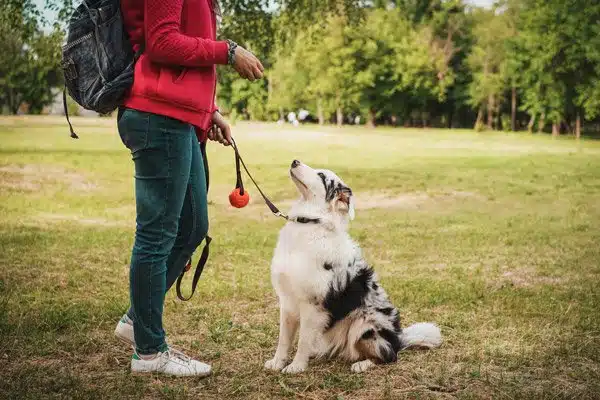

A twelve-week-old puppy learns faster than a two-year-old dog ever will. Habits formed during those first months tend to stick, for better or worse. Owners who steer them early spend far less time fixing problems later.
Teaching Good Habits Before Problem Behaviors Develop
Puppies repeat whatever earns a reward, and that includes chewing shoes or begging at the table. Early lessons replace those choices with better ones before they harden into routines. Short sessions of five minutes work best, since young brains tire quickly. Consistent household rules matter just as much, because a puppy allowed on the couch on Monday will not understand a ban on Tuesday. Potty training puppy routines fit here too, as a steady schedule teaches patience and structure at once. Clear habits at four months become easy manners at four years.
Helping Puppies Get Comfortable Around People and Other Dogs
Socialization has a narrow window, which closes around sixteen weeks. Puppies that meet friendly people, calm dogs, and everyday sounds during that period usually grow into relaxed adults. Those that miss it may startle at strangers or bark at bicycles. Quality puppy training uses supervised play groups so each meeting stays positive. Quantity matters less than quality, since one scary encounter can leave a lasting mark. Owners who search puppy training near me often want exactly this controlled exposure, and a well-run class provides it safely.
Making Basic Commands Easier to Follow as Dogs Grow
A puppy who learns sit, down, and come early carries those skills into adolescence, when focus tends to vanish. Teenage dogs test limits, yet a solid foundation gives owners something to fall back on. Repetition builds fluency, so the cue works even when squirrels appear.
Dogs raised this way move into dog obedience training with a head start. Advanced work, such as long stays and distance recalls, builds on what puppyhood already set in place. People looking for dog obedience training near me often find that graduates of early classes progress in weeks rather than months.
Preventing Leash Pulling, Jumping, and Excessive Barking Early On
Small habits turn into big ones as dogs gain weight. A puppy pulling on the leash is a nuisance, but a seventy-pound adult doing the same can injure an owner. Teaching loose-leash walking from day one costs little and avoids that outcome.
Jumping and barking follow a similar path. Greeting politely earns attention, while jumping gets ignored, and that simple trade rewires behavior quickly. Barking needs its own plan, since boredom, alerting, and demand barking each call for a different response. Catching the pattern early keeps it from becoming a neighborhood complaint.
Building Confidence and Self-Control That Carry Into Adulthood
Confidence comes from small wins, such as figuring out a puzzle toy or waiting calmly for a meal. Self-control grows through exercises like settling on a mat or pausing at doorways, and both skills pay off when excitement runs high. Dogs with those tools handle vet visits, houseguests, and new places with less stress. Fearful puppies benefit most, since gentle exposure turns hesitation into curiosity. Adult dogs that grew up learning to think before acting usually need fewer corrections and enjoy more freedom at home and outdoors.
Matching these lessons with professional guidance speeds everything up, and K9 Dynamics provides dog training Huntsville AL families can count on from puppyhood through adulthood. Their programs cover early manners, housebreaking support, and structured obedience, all tailored to each dog’s age and temperament. Owners comparing dog training near me options will find that a quick evaluation clarifies where a puppy stands and what comes next.