

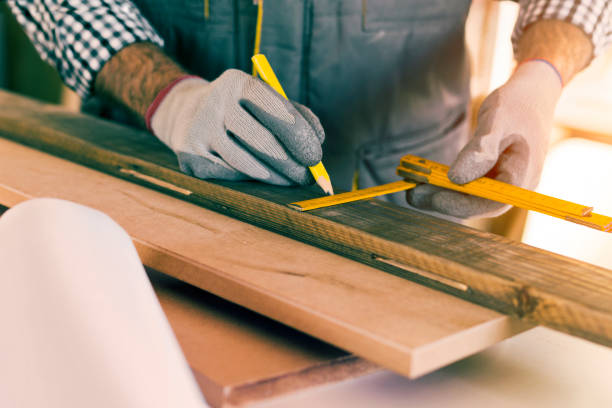

We were sitting on those slightly wobbly stools at a neighborhood café, the kind where everyone pretends they’re productive on laptops but mostly just eavesdrops. She was venting about her house. Not in a dramatic “everything is falling apart” way, more like tired frustration. Her kitchen had this awkward corner that wasted space. Her hallway shelves were sagging. The closet doors never quite lined up. Little things, but those little things add up until your home starts feeling like a place you tolerate instead of enjoy.
She told me she’d been scrolling through Instagram late at night (dangerous habit, honestly) and got stuck in that loop of renovation videos. You know the ones. Perfectly smooth transitions, sawdust flying in slow motion, before-and-after shots that feel almost illegal. That’s when she started seriously looking into custom carpentry services, not the big-box “we’ll install whatever fits in this box size” approach, but actual tailored work where someone listens before they measure.
What surprised her was how emotional the process felt. She expected it to be technical. Measurements, wood types, costs, done. Instead, the conversations went into how she uses her space, where she drops her keys every day, why she hates overhead cabinets, how she wants a reading nook because her apartment never had one. It wasn’t just about wood, it was about habits. Lifestyle stuff. A little too personal at times, but in a good way.
There’s this weird myth floating around online that custom work is always wildly expensive. TikTok comments are full of people assuming you need “celebrity money” to afford anything bespoke. But she showed me her quotes and honestly, some of them weren’t that insane compared to store-bought furniture that still needs assembly and somehow always comes with one missing screw. There’s also a lesser-known fact (she dug this up in a late-night Google rabbit hole) that well-built custom pieces often last decades longer than mass-produced furniture. So yeah, upfront cost higher, but over time? Might actually be cheaper. Nobody likes to talk about that part.
She laughed telling me about the first carpenter she almost hired. Nice guy, apparently, but he kept interrupting her and pitching ideas that didn’t fit her vibe at all. She wanted warm, simple, natural wood. He kept pushing glossy finishes and complicated patterns. It felt like going to get a haircut and the stylist insists on bangs when you already said no bangs three times. That’s when she realized the “custom” part in custom carpentry services really only works if the person actually listens.
The carpenter she ended up choosing took his time. Asked more questions than she expected. Some probably unnecessary, but still. He even asked what she usually cooks, because that would affect how he designed the kitchen shelves and prep space. That level of detail felt excessive at first, but later she understood why everything just worked. Like the shelf height was perfect for her favorite mugs. The pull-out drawer under the stairs fit her vacuum exactly. These aren’t things you get when you grab something off a warehouse shelf.
One thing she said that stuck with me was how different the energy felt during the installation. Instead of the usual chaotic contractor vibe, in-and-out, dust everywhere, radio blasting, this felt slower, more intentional. She compared it to watching someone cook a proper meal instead of microwaving leftovers. There’s patience involved. You notice it.
Social media is weirdly obsessed with “aesthetic homes” right now. Beige walls, curved mirrors, wooden slats, everything looking like a Pinterest board. But behind the filters, a lot of those spaces are held together by shortcuts. Cheap materials. Temporary fixes. She said her favorite part of getting real carpentry work done was knowing it wasn’t just for photos. It was built for daily life. For leaning on. For kids climbing on. For years of use.
She even admitted she’d become slightly annoying about it. Friends would come over and she’d point at the built-in bench like a proud tour guide. “See how the grain matches the table?” Most people nodded politely, probably didn’t care that much. But it mattered to her. It made the space feel intentional, like it belonged to her and not just rented from some catalog.
There’s also this quieter benefit nobody really advertises. Custom woodwork can increase home value in a way that feels more organic than flashy upgrades. Real estate agents talk about it in their forums, apparently. Buyers notice craftsmanship. Solid details. Things that feel permanent. It’s not just “ooh pretty shelf,” it’s “this house feels well cared for.” Subtle psychology, but it works.
She’s not suddenly a woodworking expert or anything. She still calls every tool a “drill thingy.” But she’s become more aware of how much design affects daily mood. She swears she’s less irritated in the mornings now that her space flows better. Could be placebo. Could be real. Probably a bit of both. But if a better shelf can reduce your stress by even 5%, that’s kinda worth it, right?
Honestly, hearing her talk about the whole experience made me rethink how I look at home upgrades. I used to see carpentry as just functional. Fix this. Build that. Done. But there’s a personal layer to it when it’s done right. It’s less about construction and more about translating how someone lives into physical form. That sounds deep for wood and nails, but here we are.
She ended our coffee rant by saying she wishes she’d done it sooner. That she wasted years adapting to her house instead of shaping it to fit her. That line stuck with me. Because a home shouldn’t feel like something you’re constantly working around. It should work with you. And yeah, maybe that’s where the real value of thoughtful, well-done carpentry lives. Not in the trends, not in the Instagram posts, but in those quiet daily moments when everything just… fits.